Aleph Alpha2026-10-03 18:42:33Aleph Alpha releases 78 billion-parameter open-source AI model KolibriEuropean AI company Aleph Alpha has released Kolibri, an open-source AI model with 78 billion parameters. The model is offered under an open-weight license and is positioned around compliance with European regulations. According to the item cited by Techub News, Kolibri could have implications for areas including defense and public administration. The report cites Crypto Briefing as the source. No further technical details, launch timeline, or deployment data were disclosed in the brief.50
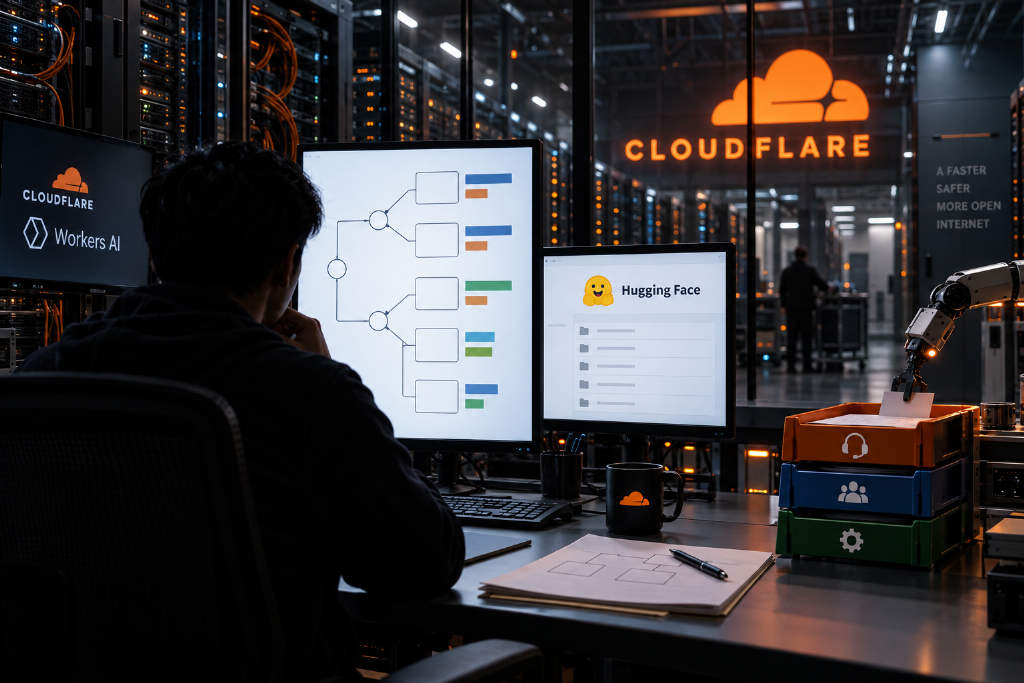
Cloudflare2026-10-02 16:53:23Cloudflare open-sources Clef decision models and launches enterprise fine-tuning serviceCloudflare said on Oct. 1 that it has released two in-house AI decision models, Clef and Clef-flash, through Workers AI and open-sourced their weights on Hugging Face under the Apache 2.0 license. Unlike general-purpose language models, the new systems are built for classification and routing tasks rather than text generation, returning typed answers with probabilities so software agents can decide what to do next. Cloudflare said the models can be used for tasks such as triaging customer support messages, assigning requests to the right team, and deciding whether a case should be escalated or handed to a human. The company also shared benchmark and product details. In Cloudflare’s published tests, Clef led the Jev Decision Index, with median latency of 209.3 milliseconds, while Clef-flash posted 38.8 milliseconds and Jev recorded 524.1 milliseconds. Cloudflare said Clef also adds a vision encoder, extends context length from 32k to 64k, and remains fully compatible with the Jev API. Alongside the model release, the company introduced a reinforcement learning service that will initially be delivered with help from its deployment engineering team before moving toward a self-serve platform for data collection, fine-tuning, and redeployment.40
open-weight m2026-09-28 06:36:59Open-weight AI models spread from tech firms to traditional U.S. companiesOpen-weight AI models are gaining traction beyond the technology sector and moving into mainstream U.S. corporations, according to a Financial Times investigation cited by ChainCatcher. Data from AlphaSense showed that mentions of open-weight or open-source models in earnings calls and investor meetings by U.S. companies in August and September were about six times higher than a year earlier. The shift is now showing up in public comments from companies including PNC Financial, logistics group CH Robinson and Siemens. Some companies also disclosed how they are using different model types for different workloads. Tinder said its annualized AI spending rose from about $1 million in January to about $10 million in July, and that it has started routing some routine requests to open-weight models. AT&T said roughly 40% of its AI tasks are currently handled by open models, with plans to raise that share to about 70%. The company added that its internal AI systems process about 45 billion tokens a day, using lower-cost models for simpler tasks while keeping OpenAI and Anthropic models for more complex work.250
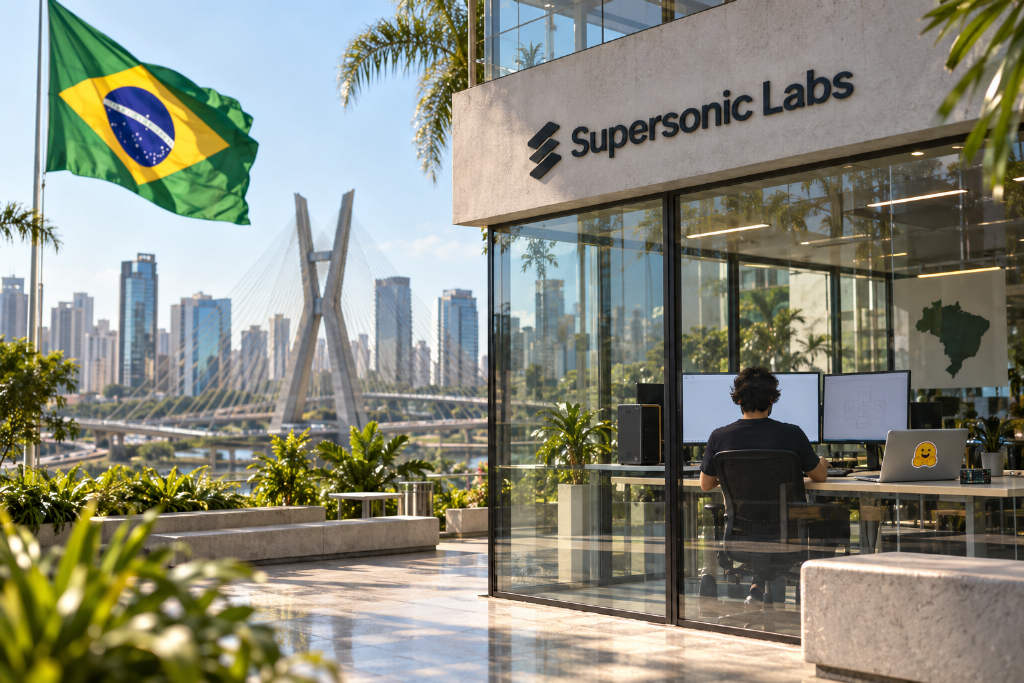
Supersonic La2026-09-26 19:54:30Supersonic Labs releases Julia 1, a 144.3 million-parameter open-source decision model that runs on CPUsBrazilian AI lab Supersonic Labs has released Julia 1, an open-source decision model built for structured decision tasks rather than general-purpose language generation. The model has 144.3 million parameters and is designed to run locally on standard CPUs, removing the need for high-end GPUs. Its weights have been published on Hugging Face under the Apache 2.0 license, and the model also supports browser-side execution through ONNX with WebGPU. Julia 1 uses a single API to handle three types of decision workflows: choosing from 2 to 20 options, assigning ratings on ordered scales such as low, medium, and high, and estimating the probability that a yes-or-no statement is true. Supersonic Labs said the model is built on Johns Hopkins University’s mmBERT-small encoder and is not a fine-tuned version of an existing large language model. The lab put total training cost at about $104. In benchmark results released by the team, Julia 1 posted 73.15% accuracy on the Typed Decisions task, slightly above the reference baseline for the TypeSafe Jev model. Performance was weaker on some other tasks, including Banking77, where accuracy reached 64% across a 72-label classification setting. On Apple’s M4 chip, the median latency for a single decision was 33.15 milliseconds.190
Yandex2026-09-21 15:14:26Yandex releases AliceAI Foundation 80B-A3B under an open-source licenseRussian technology company Yandex has released its AliceAI Foundation 80B-A3B foundation model under an open-source license, according to a Techub News brief citing Crypto Briefing. The company said the model is intended to support innovation, lower the barrier to AI development, and enable a wider range of application building. The update was published as a short news item, with no additional technical specifications, deployment details, or licensing terms disclosed in the source text. Based on the information provided, the announcement centers on broader access to the model and its stated role in expanding development use cases. No further information was included on model architecture beyond the name, commercial availability, or release timeline outside the publication timestamp attached to the brief.340
Jev2026-09-20 05:34:16OpenJEV Splits Into Four Paths Within a Week as Replication Proves Easier Than Reliable ProbabilitiesLess than a week after Jev appeared, open-source developers had already begun rebuilding the idea of a model that skips token-by-token generation and outputs answer choices with probabilities directly. What looked at first like a single design pattern has quickly broken into several distinct approaches. Some projects, such as SemIf and Simple Jev, read scores from existing large language models without retraining them. Others, including Laya, Von, and Verdict, move toward dedicated decision models that behave more like classifiers than text generators. Kev keeps a large model backbone but adds a decision-specific structure, while Nimble focuses on post-training with data designed to flip the correct answer by changing only one fact. OpenJev goes furthest from the original language-model setup by switching to DiffusionGemma and filling answer slots in one pass, reporting a median single-request latency of about 94 ms on an RTX PRO 6000. Across these efforts, the gap is no longer about copying the interface. The harder problem is whether the model is actually accurate, generalizes to unseen questions, and can make confidence scores that mean what they claim to mean.330
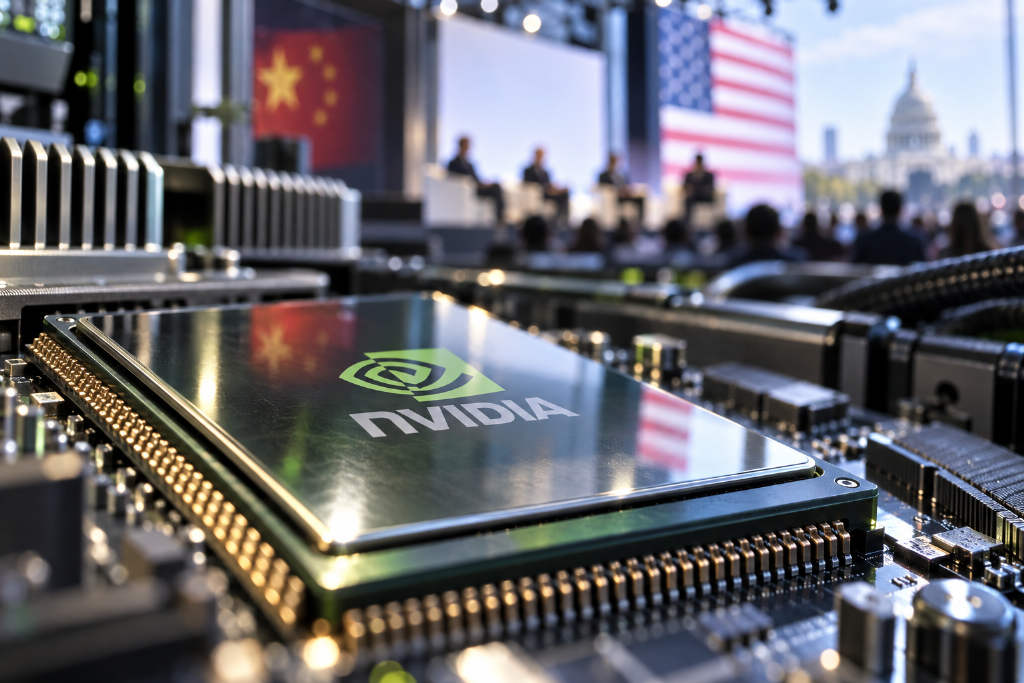
Jensen Huang2026-09-15 14:47:26Jensen Huang says many AI doom forecasts are made up, calls China a likely force in open-source AINVIDIA CEO Jensen Huang used an appearance at All-In Summit 2026 on Sept. 14 to push back against apocalyptic AI narratives, arguing that safety and innovation should not be framed as mutually exclusive goals. Discussing AI safety, recursive self-improvement, open- versus closed-source models, industrial buildout and AGI, Huang said many headline-grabbing forecasts about extinction risk, mass job losses and imminent labor collapse were not grounded in solid science and had helped fuel public panic. Huang said actual safety incidents should be treated as engineering problems: investigate root causes, identify failures, and turn the lessons into process controls, testing standards and technical safeguards. He also said frontier labs, because they command the most compute and work on the most advanced systems, are the places regulators should focus on first. On model development, he described so-called recursive self-improvement as a combination of existing tools such as context handling, reinforcement learning, synthetic data and LoRA rather than a mysterious leap beyond control. He argued that both open and closed models are necessary, adding that China could contribute a large share of the global open-source ecosystem because of its deep pool of engineers and science and math talent. When asked whether AGI has arrived if the benchmark is human-level intelligence, Huang answered plainly: it already has.800
AI regulation2026-09-12 02:30:16All-In Podcast argues AI doomsday rhetoric may weigh on Anthropic IPO plansA recent episode of the All-In Podcast examined whether existential-risk warnings around artificial intelligence reflect genuine public concern or a deliberately amplified "AI doomsday" narrative. The discussion, featuring four veteran angel investors, focused on the motives behind that messaging and its possible effect on Anthropic’s path to the public markets. The program argued that doomsday framing can serve commercial interests by shifting attention away from issues such as labor displacement and concentration of power, while also helping large technology companies push for rules that raise barriers to entry through regulatory capture. The episode also linked the debate to Anthropic’s valuation outlook, saying public warnings from insiders or technical staff about unresolved product risks could make it harder for investors to judge business durability and legal liability ahead of an IPO. At the same time, the podcast reiterated its support for open-source AI, describing it as a way to counter concentration among a small group of large model providers and claiming open models can cut computing and application costs by as much as 50x.790